Your cart is empty
Your cart is currently empty. Let us assist you in finding the right product.

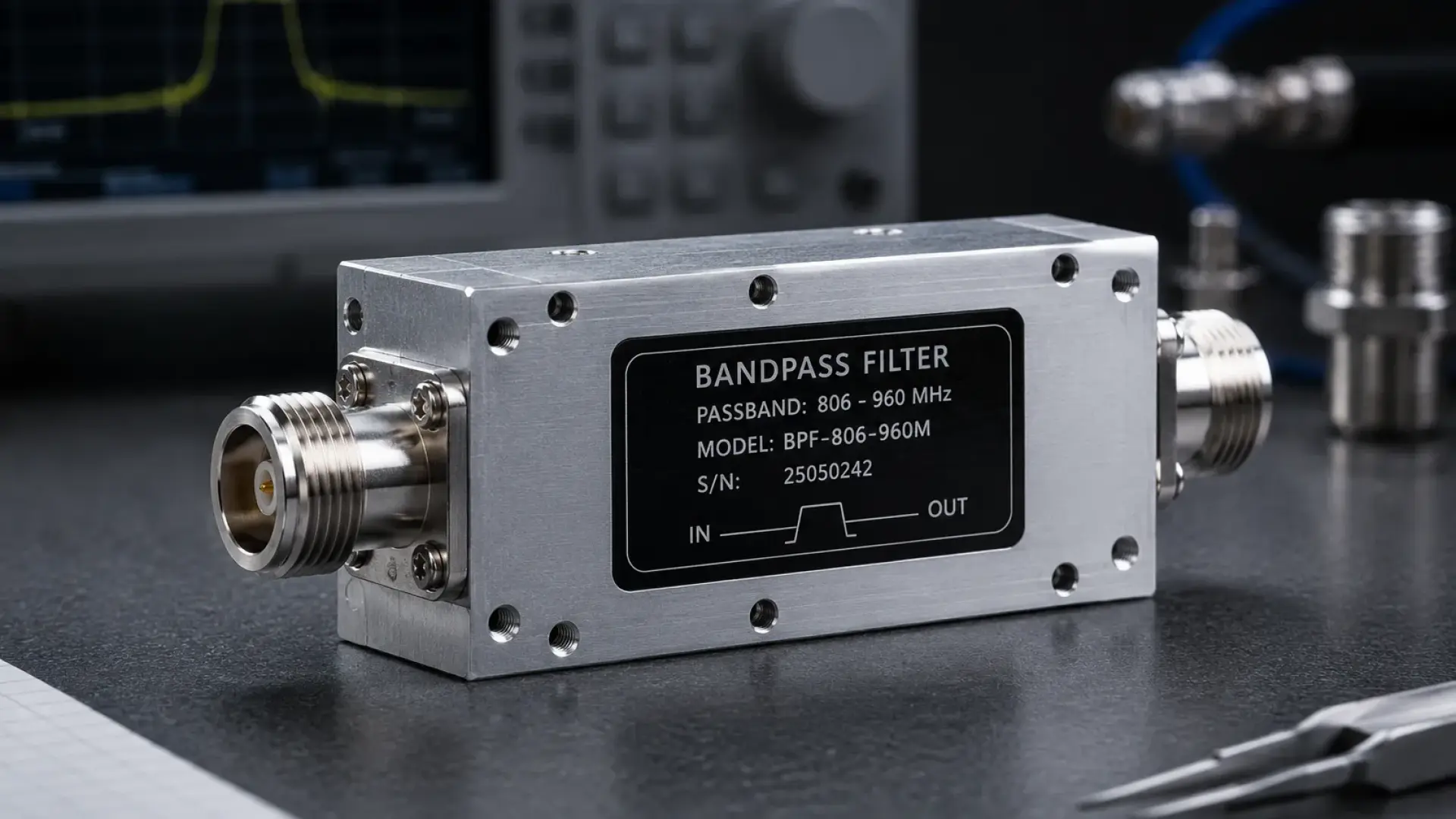
Selecting a bandpass filter sounds straightforward until you're staring at a datasheet full of specs that all seem to matter. Insertion loss, rejection, VSWR, power handling — get one wrong and your entire signal chain suffers. Here's what actually drives the decision.
Start With Your Frequency Plan, Not the Catalog
Before comparing filters, nail down exactly what you're passing and exactly what you're rejecting. A filter spec'd for "2–4 GHz" tells you almost nothing about how it behaves at 1.9 GHz or 4.2 GHz — the skirts matter as much as the passband. Map out your adjacent channels and interferers first, then work backward to the rejection profile you actually need.
Insertion Loss Is a Budget, Not a Number
Every filter costs you signal. In a long chain — antenna, coupler, filter, amplifier — losses stack. A 0.5 dB difference between two filters might look trivial on a datasheet, but across a multi-stage system it can be the difference between meeting your link budget and missing it. Always evaluate insertion loss in the context of your full signal chain, not the component in isolation.
Don't Underestimate Power Handling
This is where field failures happen most often. A filter that performs beautifully on the bench can degrade or fail under sustained high-power operation, especially in aerospace and defense applications where thermal cycling and vibration are constants. Match power handling to your worst-case operating condition, not your typical one.
Military and Aerospace Applications Add Another Layer
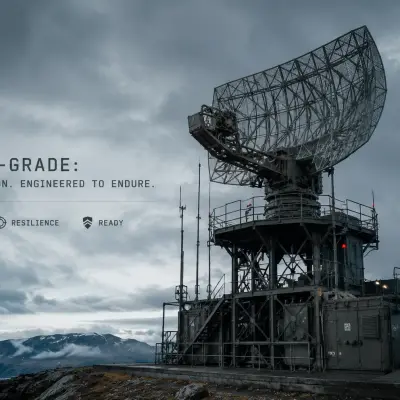
For defense and aerospace use, environmental qualification isn't optional — shock, vibration, temperature extremes, and long-term reliability under continuous duty cycles all need to be validated, not assumed. Components designed and tested for DC–67 GHz coverage give you headroom as system requirements evolve, rather than locking you into a narrow-band solution that needs replacing at the next design revision.
Custom vs. Off-the-Shelf
Standard catalog filters cover a huge range of common applications, but mission-critical or space-constrained systems often need a custom passband, form factor, or connector configuration. If your application sits outside standard offerings, it's worth engaging early — custom filter design has long lead times, and starting the conversation during initial system design (rather than after a prototype fails) saves both time and cost.
The Takeaway
The "best" filter isn't the one with the best single spec — it's the one that fits your full system: frequency plan, loss budget, power profile, and environmental conditions. If you're unsure where to start, sending your system requirements to an applications engineer up front is almost always faster than iterating through datasheets alone.
Buy ₹100 more to get free shipping
Your cart is currently empty. Let us assist you in finding the right product.