Your cart is empty
Your cart is currently empty. Let us assist you in finding the right product.

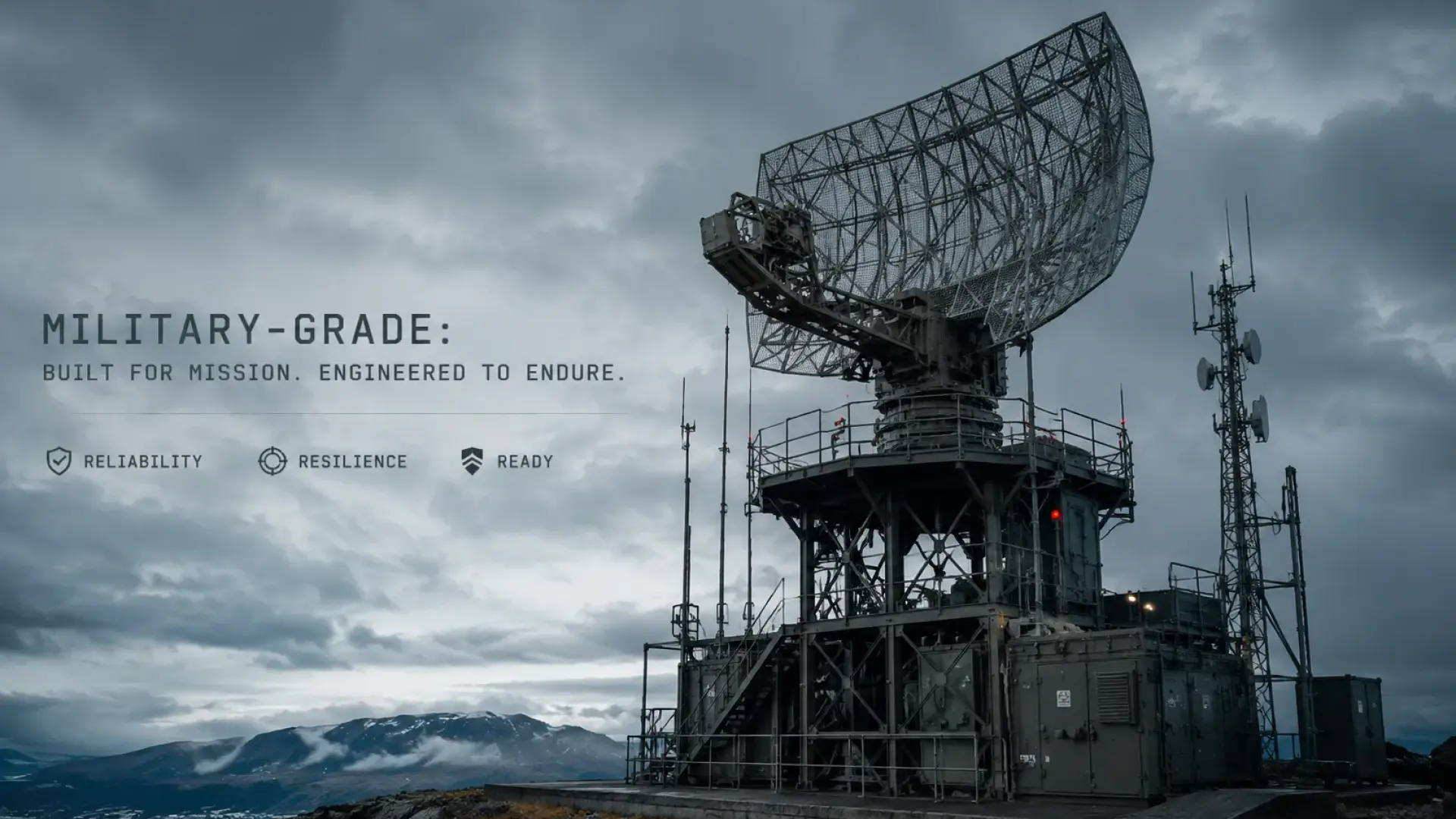
"Military-grade" gets used loosely across the electronics industry, often as a marketing shorthand rather than a real qualification. For RF and microwave components going into defense, aerospace, or other mission-critical systems, the distinction matters — components that fail in the field aren't just a returns issue, they're an operational risk. Here's what separates genuinely ruggedized components from components that simply claim to be.
Consumer and commercial-grade components are typically validated for a narrow, predictable operating envelope. Military and aerospace applications demand components proven across extremes: temperature cycling from sub-zero to high heat, mechanical shock, sustained vibration, humidity, and altitude-related pressure changes. A component that hasn't been tested against these conditions — and documented as such — is an unknown risk in a system where downtime or failure isn't an option.
A well-designed filter or coupler is only as reliable as the manufacturing process behind it. Consistency across production runs — not just a strong first-article sample — is what determines whether a system performs the same way in unit 1 and unit 1,000. This is why rigorous testing and quality processes throughout manufacturing matter as much as the underlying RF design itself.
Defense and aerospace programs often span years or decades, with requirements that shift as systems are upgraded. Components engineered for wide frequency coverage — DC through 67 GHz, for example — give program engineers headroom to accommodate future frequency plan changes without a full component redesign, which matters enormously over a long program lifecycle.
Genuine military and aerospace-grade suppliers do more than relabel a commercial part. They engineer to the specific mechanical, thermal, and RF requirements of the platform — custom connectors, form factors, and passbands included — because standard catalog parts rarely fit the constraints of a defense or aerospace chassis without modification.
When evaluating RF component suppliers for defense, telecom infrastructure, or aerospace programs, the questions worth asking go beyond the datasheet:
"Military-grade" should describe a rigorous, documented standard — not a label. Components built and tested for the demands of defense, telecom, and aerospace applications reduce risk across the entire system lifecycle, not just at initial deployment.

Buy ₹100 more to get free shipping
Your cart is currently empty. Let us assist you in finding the right product.